Dealer Stock Signals a More Selective Summer for Boat Buyers
A BIA-published market view points to used inventory, repowering and delivery capacity as practical finance considerations.
The information on this website is general in nature and does not take into account your objectives, financial situation, or needs. Consider seeking personal advice from a licensed adviser before acting on any information.
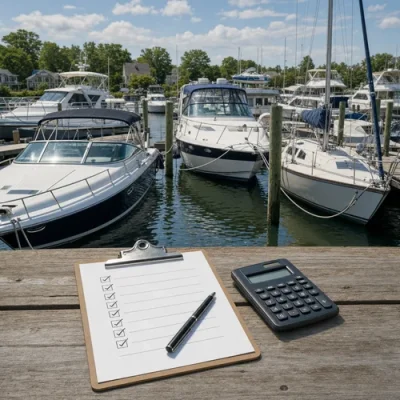
Fresh industry commentary published by the Boating Industry Association has put a more nuanced summer boating market in view, with dealer stock, used vessels, repowering activity and workshop capacity all shaping the path from browsing to ownership.
For Australian households considering a boat purchase, the message is not simply that conditions are stronger or weaker.
It is that different parts of the market are moving at different speeds, and finance planning needs to reflect that.
The commentary, written by marine distribution financier MitchCap and published in early November 2026, describes a sector facing higher funding costs and softer discretionary demand, while still finding pockets of opportunity. It points to used boat inventory rising during the third quarter, faster movement in well-priced used stock than some new stock, continuing interest in repowering, and a softer day-boat market after winter. It also notes that some manufacturers are using finance-backed dealer programs to support stock flow and payment certainty.
For buyers, that mix can matter. More used stock may improve choice, but it does not remove the need to check condition, service history, engine hours, trailer quality and whether the vessel suits the intended waterways. A lower purchase price can be undermined if inspections, repairs, transport, registration, safety gear or storage costs are underestimated. In finance terms, the age and condition of the asset may also influence lender appetite, loan structure and pricing.
Repowering is another useful signal. If more owners are choosing new engines or trailers rather than replacing the whole boat, buyers comparing new, used and upgraded vessels may need to separate the hull value from the value of recent mechanical work. A used boat with a newer engine may have a different risk profile from an older package that will soon need major spending, even if both appear similar in advertised price.
General checks that may help with planning include:
comparing total ownership costs, not just the advertised sale price;
allowing time for inspection, mechanical checks and documentation before committing;
testing different loan terms and rate assumptions through educational repayment estimates;
reviewing how deposits, fees and repayment frequency may affect overall boat finance costs;
checking whether delivery, commissioning or repair work could affect the timing of handover.
The limitation is that dealer-level trends do not predict any individual buyer’s finance outcome or the value of a particular vessel. Advertised stock, lender criteria and personal circumstances can all vary. Still, the latest market commentary is a timely reminder that summer boat buying is as much about disciplined budgeting and due diligence as it is about finding the right model for weekends on the water.
Please Note: We do not endorse any specific products or companies. Some content is sourced from third parties, including press releases, and may not be independently verified for accuracy or completeness.
Fresh marine training developments in Queensland are a useful reminder that boat finance planning is shaped by more than interest rates, deposits and advertised vessel prices. The Boating Industry Association reported on 21 October 2026 that three maritime qualifications have been added to the Queensland Subsidised Training List, while a separate update highlighted TAFE Queensland’s new virtual delivery model for marine craft construction apprentices from Term 1, 2027. - read more
Australia’s near-new and demonstrator vehicle market is becoming more crowded, and that may change the way buyers think about car finance in the final weeks of 2026. A 10 November update from the Australian Automotive Dealer Association and AutoGrab shows used vehicle sales rose in October, but dealer-held demonstrator and near-new stock has also built up noticeably since July. - read more
Australian car buyers weighing up a new, demonstrator or near-new vehicle have a fresh market signal to consider after the Australian Automotive Dealer Association and AutoGrab reported a sharp lift in dealer-held demo and near-new stock during October 2026. The development does not automatically mean cheaper cars for every buyer, but it may change the finance conversation by putting more attention on purchase price, resale assumptions and the amount being borrowed. - read more
Fresh Australian Bureau of Statistics lending data has delivered a useful reality check for households thinking about caravan finance: demand for road vehicle loans has not disappeared, but broader personal borrowing is showing signs of caution. The September quarter figures, released on 11 November 2026, show new fixed-term personal loan commitments for road vehicles rose over the quarter, while total personal fixed-term lending moved lower. - read more
When it comes to managing a fleet, the financial decisions you make can significantly influence your business operations. Understanding the impact of fleet costs is crucial, as it helps in ensuring the sustainability and efficiency of your operations. High fleet costs can eat into your profits, making it vital to find cost-effective solutions. - read more
Choosing between a new and used truck can affect the amount you borrow, the loan term, lender assessment, maintenance risk and resale assumptions. This guide explains the main finance considerations for Australian business and personal truck buyers. - read more
Bad credit can affect truck finance eligibility, pricing and documentation requirements, but it does not always mean an application cannot be considered. This guide explains what Australian borrowers should understand before applying. - read more
For many businesses across Australia, trucks are not just vehicles—they're an integral part of operations. Whether it's delivering goods, providing services, or transporting raw materials, having a reliable truck can make all the difference in ensuring smooth business operations. - read more
Deed in Lieu of Foreclosure: A deed instrument in which a borrower conveys all interest in a property to the lender to satisfy a loan that is in default and avoid foreclosure.




No comments yet. Be the first to share your thoughts.