The information on this website is general in nature and does not take into account your objectives, financial situation, or needs. Consider seeking personal advice from a licensed adviser before acting on any information.
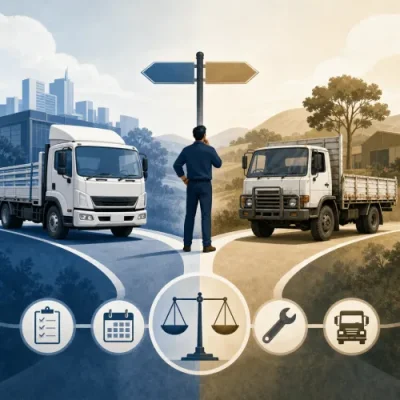
Choosing between a new and used truck can affect the amount you borrow, the loan term, lender assessment, maintenance risk and resale assumptions. This guide explains the main finance considerations for Australian business and personal truck buyers.
Choosing between a new and used truck is not only an asset decision. It can also affect how a lender assesses the application, how much you may need to contribute upfront, the loan term available, expected maintenance costs and the way repayments fit into your cash flow.
New truck finance may suit buyers who want current technology, predictable condition and manufacturer warranty support. Used truck finance may suit buyers who want a lower purchase price or a specific model that is available sooner. Neither option is automatically better. The right direction depends on the truck, the buyer, the intended use, the finance structure and the lender's criteria.
This article explains the key differences to consider before you finance a new or used truck in Australia.
New truck finance versus used truck finance at a glance
| Consideration | New truck finance | Used truck finance |
|---|
| Purchase price | Usually higher upfront cost, which may mean a larger loan amount. | Often lower purchase price, although condition and demand can affect value. |
| Depreciation | May depreciate more quickly in the early ownership period. | Some depreciation may already have occurred, but resale depends on age, condition and market demand. |
| Lender assessment | Asset age and condition are usually straightforward, but affordability still matters. | Lenders may look more closely at age, kilometres, valuation, service history and remaining useful life. |
| Maintenance risk | May be lower early on, especially where warranty and servicing arrangements apply. | Can be higher or less predictable, particularly for older or heavily used vehicles. |
| Loan term | May support a longer term if the lender is comfortable with the asset and borrower profile. | Term may be shorter where the truck is older or has limited remaining working life. |
| Deposit or equity | May still require a deposit depending on lender policy, borrower profile and asset type. | A larger deposit may be requested if valuation, age or condition creates additional risk. |
Purchase price and total borrowing amount
The most obvious difference is purchase price. A new truck will generally cost more than a comparable used truck, which can increase the loan amount and repayment commitment. However, the purchase price is only one part of the finance decision.
With a new truck, buyers may also need to account for tray, body, refrigeration, hydraulic equipment, signage, safety technology, fit-out costs or other work-ready modifications. Some costs may be financed depending on the lender, invoice details and how the equipment relates to the vehicle. Others may need to be paid separately.
With a used truck, the lower purchase price may reduce the amount borrowed, but buyers should allow for upfront inspection costs, repairs, tyres, registration transfer, compliance work, downtime and any immediate servicing. A used truck that looks cheaper at settlement may be more expensive over the first year if it needs substantial work.
Before applying, it can be useful to compare several purchase scenarios. For example, you might model repayments for a newer truck with a higher purchase price against an older truck with a lower purchase price but a shorter term. You can use a truck loan calculator to test how different loan amounts, terms and repayment assumptions may change your budget.
Truck age, kilometres and remaining useful life
Truck age finance considerations can be more important than many buyers expect. A lender taking security over the truck will usually want comfort that the asset has enough value and useful life to support the loan term.
For a new truck, the age question is simple at the start of the loan. For a used truck, lenders may consider factors such as:
- the year of manufacture and model generation;
- odometer reading or operating hours;
- service history and maintenance records;
- whether the truck has been used in heavy-duty or specialised work;
- the condition of major components;
- whether the truck is suitable for the borrower's intended work; and
- the expected value of the truck by the end of the proposed finance term.
An older truck is not automatically unfinanceable. However, age and condition can influence the lender's appetite, the term offered, the deposit required and the level of documentation requested. Different lenders may take different views, particularly for specialised assets, older prime movers, imported trucks or vehicles with high kilometres.
If you are comparing an older asset with a newer one, it may help to discuss lender criteria before you commit to a purchase contract. A finance broker can help explain how lender appetite may vary for older or specialised trucks, and you can explore available support through the broker network.
Valuation and security risk
When a truck is used as security for finance, the lender may consider whether the purchase price is supported by the asset's market value. This is where truck loan valuation can become important.
For new trucks purchased from a dealer, the invoice price, specifications and delivery documents may provide a clearer basis for valuation. For used trucks, valuation can be more variable. Two trucks of the same make and model can have very different values depending on kilometres, maintenance history, body type, modifications, accident history, emissions standard, tyres, engine condition and market demand.
A lender may rely on its own valuation process, third-party data, dealer information or additional checks. If the valuation is lower than the agreed purchase price, the lender may reduce the amount it is prepared to advance. The buyer may then need to renegotiate the purchase price, contribute more deposit or consider a different truck.
Private sales can require extra care. A lender may want evidence of ownership, proof the asset is not encumbered, clear identification of the truck and supporting documents. Buyers should also consider their own due diligence, such as checking service records, confirming specifications and arranging mechanical inspections where appropriate.
Deposit, loan-to-value and upfront contribution
The deposit needed for new or used truck finance depends on the lender, borrower profile, asset, loan structure and application details. There is no single deposit rule that applies to every truck buyer.
That said, used trucks can sometimes require more upfront contribution where the lender sees higher asset risk. This may occur where the truck is older, has high kilometres, is difficult to value, is being purchased privately or has a specialised body that may not hold broad resale appeal.
New trucks may also require a deposit if the borrower is a new business, has limited trading history, has weaker credit, wants to finance add-ons, or is seeking a structure that increases lender risk. The deposit is therefore not just about whether the truck is new or used. It is about the full transaction.
Loan term and repayment structure
New truck finance may allow a term that aligns with the expected operating life of the asset, subject to lender policy and borrower circumstances. Used truck finance may involve a shorter term if the truck will be older by the end of the loan.
A longer term can reduce regular repayment amounts, but it may increase the total interest paid over the life of the loan. A shorter term can increase regular repayments but may reduce overall interest cost. The right balance depends on cash flow, business use, tax considerations, expected ownership period and replacement plans.
Some commercial truck finance structures may also include a residual or balloon payment. This can reduce regular repayments but leaves a larger amount payable at the end of the term. For a new truck, the future value may be easier to estimate, although still uncertain. For a used truck, the future value may be more sensitive to condition, kilometres, market demand and maintenance history.
Any balloon or residual should be considered carefully. It is not a saving; it is a deferred amount that still needs to be repaid, refinanced or managed when the term ends.
Interest rates, fees and lender appetite
Truck loan rates can vary based on many factors, including borrower profile, business strength, credit history, loan amount, asset type, truck age, security position and the lender's pricing model. New truck finance is not always cheaper, and used truck finance is not always more expensive. The outcome depends on the full application.
For example, a strong established business buying a well-maintained used truck may receive a different assessment from a new business buying an expensive new vehicle with limited trading history. Similarly, a personal buyer financing a truck for private use may be assessed under different criteria from a business purchasing a truck for income-producing work.
Fees can also differ. Establishment fees, monthly fees, documentation fees, early payout costs and other charges may affect the total cost of finance. Comparing only the advertised interest rate may not show the full picture.
Maintenance, downtime and cash flow risk
Finance repayments are only one part of owning a truck. Maintenance, tyres, registration, insurance, fuel, tolls, compliance, repairs and downtime can all affect affordability.
A new truck may offer more predictable maintenance in the early years, especially where warranty coverage and planned servicing are available. This can assist businesses that rely on consistent uptime. However, new trucks can still have running costs, fit-out expenses and downtime for delivery or commissioning.
A used truck may suit a buyer who can manage maintenance in-house, has access to reliable mechanics or understands the model's known issues. However, unexpected repairs can place pressure on cash flow, especially for owner-drivers and small businesses where the truck directly generates income.
When comparing new and used truck finance, consider a practical operating budget that includes both repayments and likely ownership costs. A lower repayment on a used truck may not be enough if the vehicle is likely to need significant repairs or spend time off the road.
Tax and accounting considerations for business buyers
For business buyers, the finance structure and truck use may have tax and accounting implications. Depending on the circumstances, issues may include GST treatment, depreciation, interest deductibility, claiming operating costs, and how the asset and liability are recorded.
These outcomes depend on your business structure, tax position, finance contract and how the truck is used. This article is general information only and is not tax advice. Business buyers should consider speaking with a registered tax adviser or accountant before deciding between a new or used truck or choosing a finance structure.
If you are still comparing finance structures, it may also be useful to review how leasing and ownership differ in practice. The article Lease vs Buy: What's Best for Your Business Truck Investment? explains broader ownership considerations that may sit alongside the new versus used decision.
Commercial versus personal truck finance
The new versus used decision can apply to both commercial truck loans and personal truck finance, but the assessment may differ.
For a business purchase, lenders may consider the business's trading history, cash flow, Australian Business Number details, financial statements, bank statements, tax position, contracts, invoices, industry and intended truck use. The lender may also consider whether the truck is appropriate for the work it is expected to perform.
For personal use, the lender may focus more heavily on personal income, employment, expenses, credit history and responsible lending requirements. The truck's age, valuation and condition may still matter, especially if it is used as security.
In both cases, a used truck with a lower purchase price may seem easier to afford, but the lender will still assess whether the repayments are manageable and whether the asset is acceptable security.
Dealer purchase, auction or private sale
How you buy the truck can influence the finance process. A new truck is commonly purchased through a dealer, with invoices and specifications available upfront. Used trucks may be bought through dealers, auctions, private sellers or specialist equipment marketplaces.
Each purchase method has different finance considerations:
- Dealer purchase: documentation may be more straightforward, and the dealer may provide invoices, specifications and vehicle details.
- Auction purchase: buyers may need to move quickly, but finance approval and settlement timing must still be managed carefully.
- Private sale: lenders may require additional ownership, valuation and security checks before settlement.
- Interstate purchase: registration, transport, inspection and compliance costs may need to be factored into the overall budget.
Before paying a deposit or signing an unconditional contract, consider whether the finance approval, valuation and settlement process can be completed in time. Approval is not automatic and will depend on lender criteria and the details of the application.
Questions to ask before financing a new or used truck
Before deciding, it may help to work through the following questions:
- How long do I expect to keep the truck?
- Will the truck still be suitable for my work at the end of the finance term?
- Is the purchase price supported by condition, kilometres and market value?
- What deposit or upfront contribution can I comfortably make?
- How will repayments fit with seasonal income or contract-based work?
- What maintenance, insurance and downtime costs should I allow for?
- Does the truck need modifications before it can generate income?
- Am I buying from a dealer, auction or private seller?
- Do I need flexibility to upgrade, sell or refinance later?
- Have I compared the total cost, not just the repayment?
When a new truck may be worth considering
A new truck may be more suitable where uptime, warranty support, current specifications and predictable condition are important. It may also suit businesses with long-term contracts, specific compliance requirements or the need for a customised build.
However, the higher purchase price can increase repayments and overall borrowing. Buyers should consider whether the truck's expected income or business benefit justifies the cost and whether delivery timelines fit operational needs.
When a used truck may be worth considering
A used truck may be more suitable where the buyer wants a lower purchase price, faster availability, a specific model, or a vehicle for less intensive work. It can also be attractive for newer businesses seeking to limit debt exposure.
The trade-off is that condition, valuation and maintenance risk may carry more weight. A used truck should be assessed on its own merits rather than only on price. Service history, inspection results and likely remaining working life are important parts of the finance decision.
How to compare your options before applying
A practical comparison should include the truck price, deposit, loan term, repayment estimate, fees, residual or balloon amount, maintenance allowance, insurance and expected resale value. You should also consider how the truck supports income or personal use.
If you are ready to compare finance pathways, you can start with a truck finance enquiry and provide details of the vehicle, intended use and your borrowing situation. Any finance outcome will depend on lender assessment, eligibility, credit criteria, valuation and the information supplied.
The key point is that new and used truck finance are assessed through more than the purchase price. A suitable truck finance decision should consider the asset's value, useful life, running costs and the borrower's ability to manage repayments over the full term.
Published: Monday, 31st Aug 2026
Author: Paige Estritori




No comments yet. Be the first to share your thoughts.